What Is Illustrative Design?
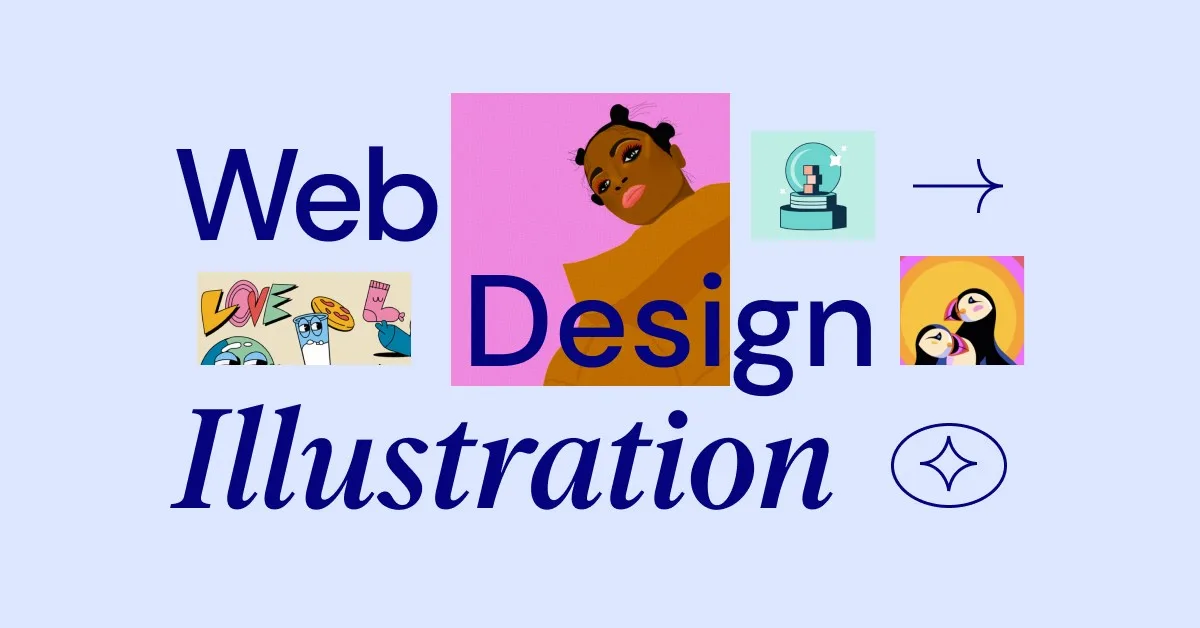
Illustrative design is the use of custom artwork — hand-drawn, vector-based, or digitally painted — as a primary visual element in web design. Rather than relying on stock photography or abstract shapes, illustrative design creates a unique visual language that is owned entirely by the brand.
Mailchimp, Dropbox, and Slack built their visual identities on distinctive illustration styles. When you see that quirky Mailchimp character or those simple Dropbox paper illustrations, you know instantly which brand you're looking at. That recognition is the value of illustrative design.
Why Illustration Works in Web Design
Immediate Differentiation
In a sea of websites using the same stock photo of a team in a meeting room, custom illustration is immediately distinctive. It signals that the brand has a point of view, a personality, and the confidence to express it visually.
Emotional Connection
Illustrations can convey emotions and personality that photography often cannot. A warm, hand-drawn illustration creates a sense of approachability. A bold, graphic illustration communicates energy and confidence. The style of illustration is itself a message about the brand.
Simplifying Complexity
Abstract services and complex processes are notoriously difficult to visualise with photography. How do you photograph "cloud storage" or "machine learning" or "financial planning"? Illustration can render these concepts clearly and engagingly.
Cultural Inclusivity
Photography almost always features specific people. Illustrations can be designed to include everyone or no one in particular, making them inherently more inclusive across global audiences.
Styles of Illustrative Design
Flat illustration uses simple shapes and limited colours without gradients or shadows. Clean, modern, and versatile.
Isometric illustration presents objects in a pseudo-3D perspective from a fixed viewing angle. Creates depth that flat illustration can't achieve.
Character illustration features distinctive recurring characters — mascots that become associated with the brand.
Abstract geometric illustration uses shapes, patterns, and colour rather than representational imagery.
Handcrafted/sketch style mimics the feel of hand-drawn art, adding warmth and a human touch.
Implementing Illustration Effectively
Consistency is everything. All illustrations on a site should share the same visual language: line weight, colour palette, level of detail, and stylistic approach.
SVG format where possible. Vector illustrations in SVG format are infinitely scalable, load faster, and can be animated with CSS or JavaScript.
Use illustration strategically. Illustrative design works best for specific moments: the hero section, empty states, error pages, onboarding flows, and feature explanations.
Conclusion
Illustrative design is an investment — creating quality custom illustrations takes time and skill. But the return is a visual identity that is uniquely yours, impossible to replicate, and deeply memorable. In a crowded digital marketplace, being memorable is a competitive advantage.